Compact offline puzzle that folds the board to guide harbour traffic
Players open edges and fold sections to route markers across a mutable board in short, thoughtful runs; this spatial planning mechanic defines the experience. Developed by TheaThea for Android, the game is a casual puzzle title focused on single-player, offline play. Key elements include six progressive challenges with increasing fold limits, undo/reset controls, and local progress tracking. It fits players who enjoy brief, cerebral sessions and privacy-conscious mobile gaming without online requirements.
What the game asks you to do and how the loop plays out
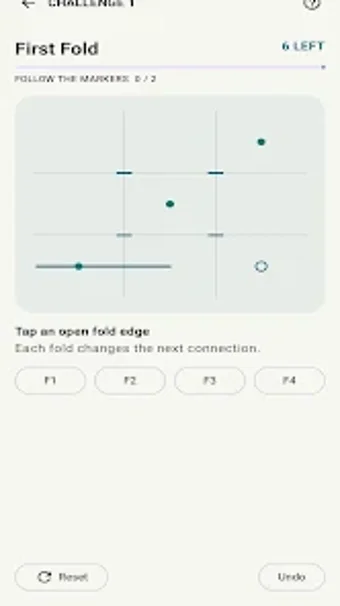
At its core the game turns route planning into an order-sensitive puzzle: you open edges, then fold board sections in a specific sequence so markers reach an exit. The app presents six levels of increasing complexity, each limiting the number of folds allowed. Sessions run roughly two to five minutes per challenge, which encourages deliberate inspection of the full board before committing to moves.
How the mechanics shape player choices and experimentation
The folding mechanic changes path connections dynamically, so a single fold can reroute multiple markers. Undo and reset controls let you experiment without penalty, and local progress tracking records completed boards on-device. The restriction on fold counts forces trade-offs between opening new routes and preserving future options, which makes each decision carry weight rather than relying on trial-and-error alone.
Interface, presentation, and device demands
The interface is minimalist with explicit visual feedback for open edges and used folds, keeping the screen focused on the puzzle. The app is lightweight at about 4.6 MB and runs offline with no special permissions, which matches the privacy-focused design. Graphics and audio are deliberately spare, which keeps attention on spatial logic instead of decorative elements.
Difficulty curve, progression, and replay value
Difficulty increases by raising fold limits and board complexity across the six challenges, so the learning curve is gradual rather than abrupt. Short session lengths and local completion records support repeat attempts to refine sequences. Replay value depends on enjoying tight spatial puzzles; players who prefer emergent or multiplayer content may find the single-player, fixed-challenge structure limited.
A steady choice for focused puzzle players seeking short, private sessions
9sssHarbor is a small, deliberate puzzle title that suits players who enjoy planning moves under a fold-count constraint and value offline, permission-free play. It rewards methodical thinking and repeat attempts on concise boards. Consider the game if you prefer compact single-player challenges that emphasise sequencing and spatial reasoning rather than open-ended or social features.